
Scroll to learn more
About Wet Age-Related Macular Degeneration
Recognizing Early Symptoms of Wet Age-Related Macular Degeneration
Symptoms of AMD while in the dry stage are sometimes hard to notice, but once AMD progresses to the wet form, these symptoms can become more severe much more quickly. People experiencing wet AMD will notice changes to their central vision such as:
- Distortion (straight lines appearing crooked or wavy)
- Dimming
- Blurring
- Changes in color perception
- Difficulty seeing in dim lighting
- Difficulty recognizing faces
These symptoms may be worse in one eye than the other or only affect one eye.1 It’s important to always check both eyes individually to ascertain where the visual symptoms are occurring and to check for changes. Regular monitoring and ongoing treatment are important, as wet AMD is a long-term condition which requires continued care.
Frequently Asked Questions About Wet Age-Related Macular Degeneration
What is wet age-related macular degeneration?
Wet age-related macular degeneration (AMD) is the name for the form of AMD when new blood vessels form and cause damage to the macula. When the new blood vessels leak fluid, this can cause the layers of the macula to lift from their usual position which affects central vision.4 Wet AMD is less common than dry AMD (only accounting for about 20% of cases), but progresses more quickly and is a more advanced form of the disease.3
Who is at risk?
The exact cause for AMD is not known, but risk factors for developing macular degeneration include:
- Age (being over the age of 50)
- Race (AMD is more common among those who are white)
- Family history
- Smoking
- Cardiovascular disease
- Obesity
Because only a small number of these risk factors are within control, the best defense against developing AMD or the disease progressing is to care for one’s whole-body health.4
How is wet AMD diagnosed?
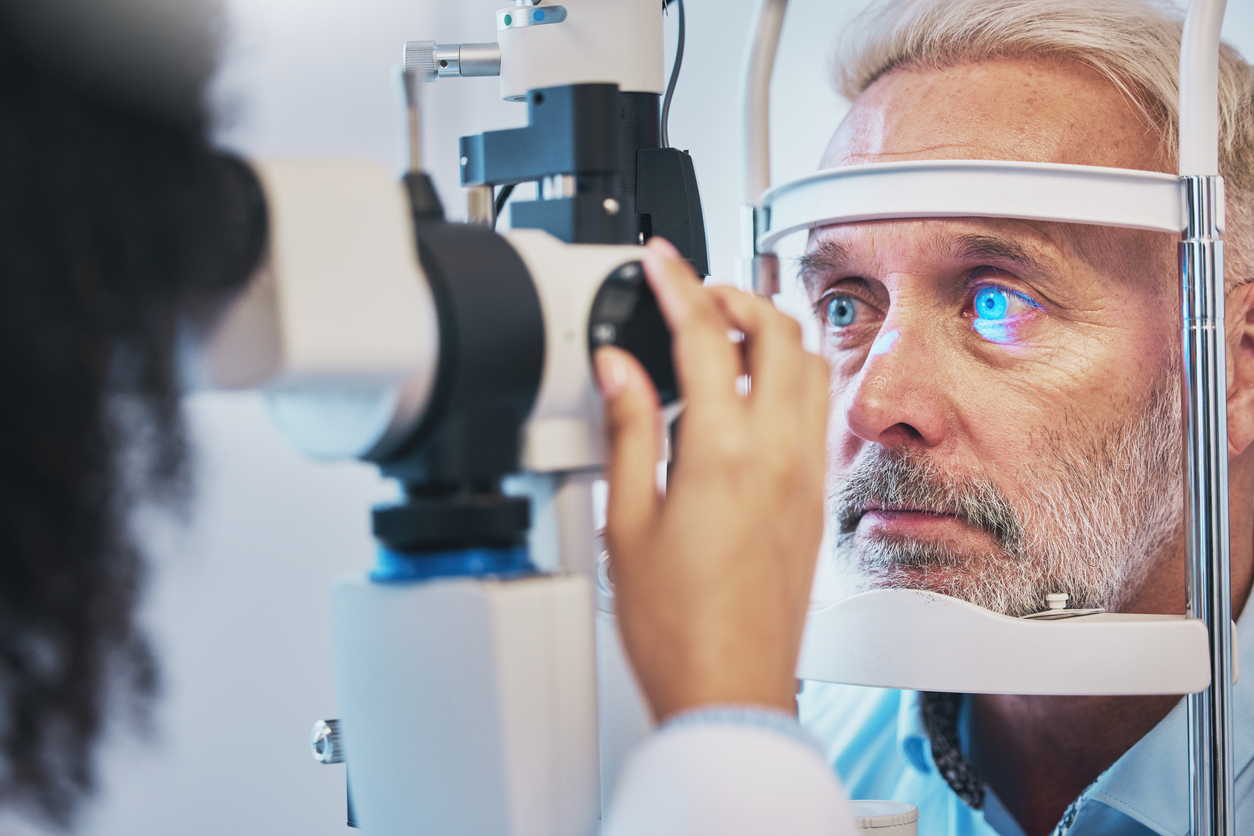
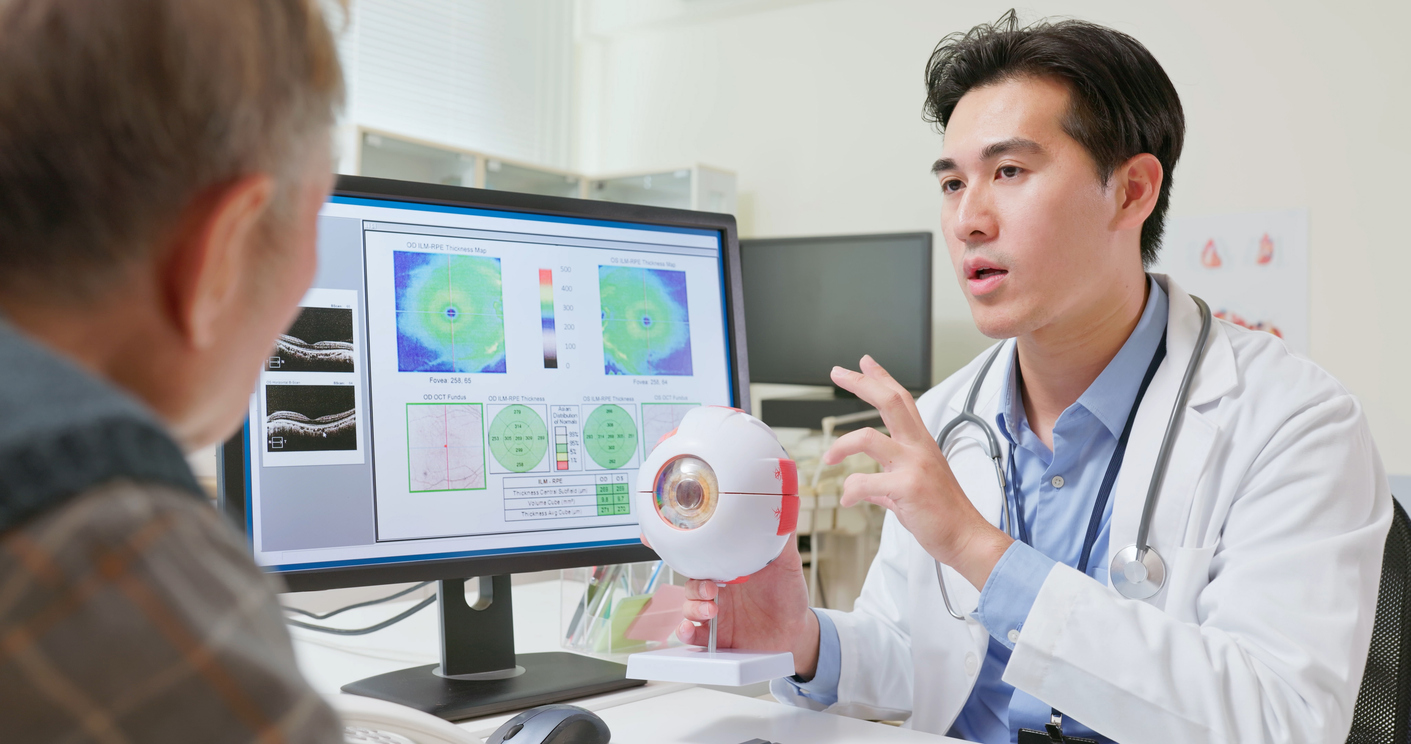
Diagnosis will include all steps of a typical routine eye exam such as reading the eye chart and widening the pupils to examine the back of the eye. You may also be asked to look at an Amsler grid, which can help the doctor understand if there are any areas of distortion in your vision, where they are, and the severity of your symptoms. An optical coherence tomography (OCT) is another piece of diagnostic equipment. This allows the doctor to view the layers of your eye to check for abnormalities. In some cases, the doctor may also order a fluorescein angiography, which involves taking a series of photos of the eye after an intravenous dye has been injected into your arm. This helps check for active leaks in the blood vessels.4
What doctor will I see for my AMD?
Any eye care professional can diagnose AMD. This includes optometrists and ophthalmologists. However, when it is time for you to receive treatment for your AMD, this will be performed by a subspecialist ophthalmologist: a retina specialist.4 Because these doctors are highly specialized, they may have you maintain follow-ups with your other eye care providers to keep a close watch on the rest of your eye health.
How can I help manage my AMD?
Managing AMD involves taking steps to ensure your whole body is healthy. These include:
- Don’t use tobacco
- Stay active and maintain a weight that is healthy for you
- Ensure you have plenty of leafy green vegetables and fish in your diet1
You can also:
- Maintain regular follow-ups with your doctor
- Use an Amsler grid at home to monitor for changes2
Are there new treatments for wet age-related macular degeneration?
Researchers are continuously investigating potential new and more effective treatments. For guidance on the best treatment options for you—and to determine if you may qualify for a clinical trial—please speak with your healthcare provider.
Sources:
1National Eye Institute. National Institutes of Health. Age-Related Macular Degeneration. https://www.nei.nih.gov/eye-health-information/eye-conditions-and-diseases/age-related-macular-degeneration
2Cleveland Clinic. (Sept. 28, 2023). Wet Macular Degeneration. https://my.clevelandclinic.org/health/diseases/wet-macular-degeneration
3Mayo Foundational for Medical Education and Research. (Dec. 11, 2024). Wet Macular Degeneration. https://www.mayoclinic.org/diseases-conditions/wet-macular-degeneration/symptoms-causes/syc-20351107
4American Macular Degeneration Foundation. (2025). Wet Macular Degeneration. https://www.macular.org/about-macular-degeneration/wet-macular-degeneration
5American Academy of Optometry. (Nov. 25, 2025). Understanding Macular Degeneration. https://www.aao.org/eye-health/diseases/amd-macular-degeneration