

Scroll to learn more
About Head and Neck Squamous Cell Carcinoma
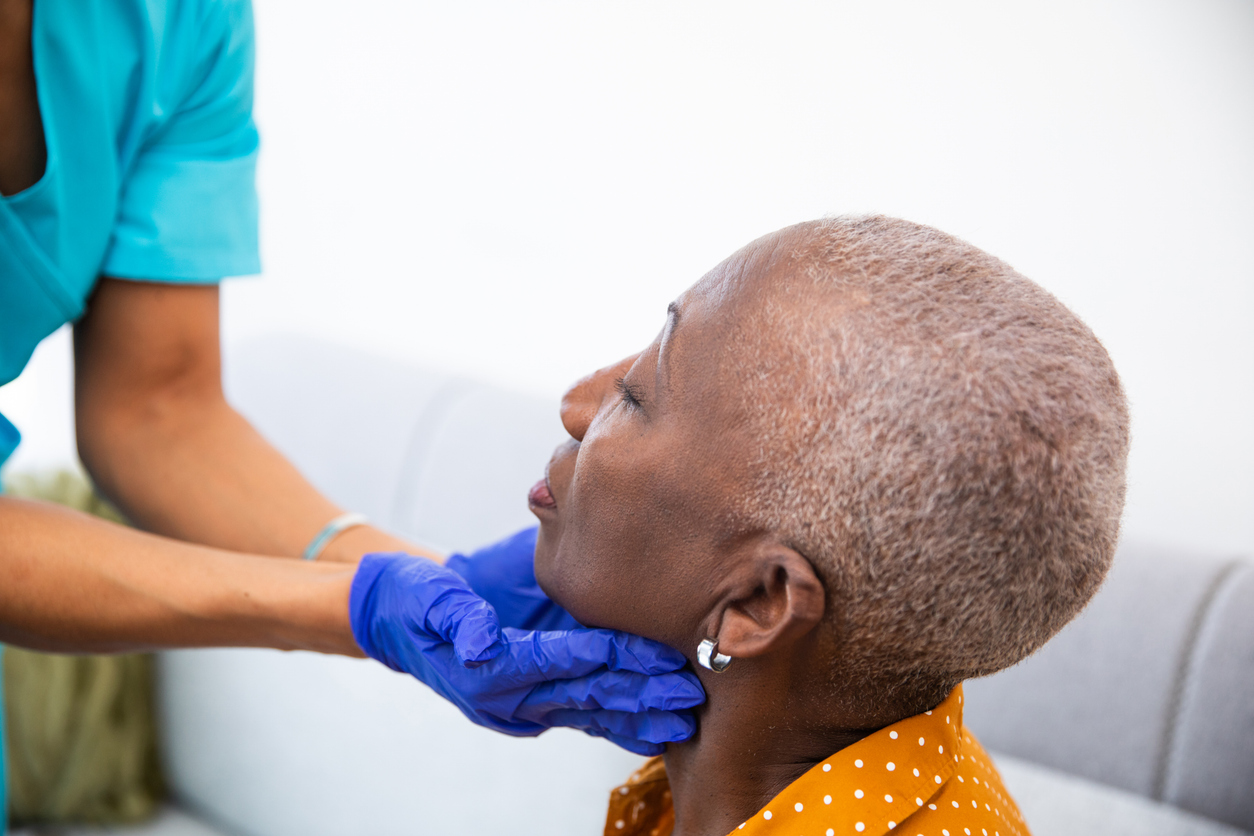
Recognizing Early Symptoms of HNSCC
Early signs and symptoms of HNSCC can vary depending on where the cancer starts:
- Mouth: A sore or patch that doesn’t heal, unexplained bleeding or persistent discomfort
- Throat or voice box: Persistent sore throat, hoarseness or changes in the voice
- Nasal cavity and sinuses: Ongoing nasal or sinus blockage
Other significant early warning signs:
- Ongoing ear pain without infection
- Pain or difficulty swallowing
- Shortness of breath
- Swelling from enlarged lymph nodes
Frequently Asked Questions About HNSCC
How common is head and neck squamous cell carcinoma?
Head and neck squamous cell carcinoma (HNSCC) ranks as the seventh-most common cancer worldwide.3 In the United States, approximately 50,000 new cases are reported each year, with roughly 890,000 newly diagnosed patients globally each year.1
What parts of the head and neck does HNSCC affect?
HNSCC can be found in the following parts of the body:
- Mouth
- Nasal cavity (inside your nose) and sinuses
- Larynx (also called the voice box, which helps you produce speech and song)
- Throat:
- Oropharynx – This is the part of your throat near the mouth
- Nasopharynx – This is the upper part of the throat, located behind the nose
- Hypopharynx – The lower throat, near the larynx
HNSCC is often classified by where in the head or neck it is located.1 3
What are the main risk factors for head and neck squamous cell carcinoma?
Head and neck squamous cell carcinomas are most often caused by tobacco use and/or heavy alcohol use. People who smoke or chew tobacco or drink heavily have a much higher risk, especially if you do both of these things.
Other important risk factors include infection with human papillomavirus (HPV), which is linked to some throat cancers, especially those affecting the tonsils and the back of the tongue. Men with a higher lifetime number of sexual partners are at higher risk of developing HPV-related HNSCC. Chewing areca nut (betel quid) and infection with Epstein-Barr virus (EBV) are also risk factors, particularly for cancers that develop behind the nose.1
Men in their 50s and 60s are the most common demographic diagnosed with HNSCC.3 However, there is a rise in HNSCC cases in younger people, often linked with HPV infections.1
What habits or factors can help reduce the risk of head and neck squamous cell carcinoma?
Avoiding or stopping use of tobacco products and areca nut (betel quid) and limiting alcohol use can help lower your risks of HNSCC. Being aware of risk factors like HPV and staying up to date on vaccinations, can also be helpful.1
Can head and neck squamous cell carcinoma run in families?
Most cases of HNSCC are not inherited. The cancer usually develops from changes in cells that happen during a person’s life, often due to factors like smoking, drinking alcohol or certain viral infections, rather than genes passed down from parents.3
How is head and neck squamous cell carcinoma diagnosed?
Head and neck squamous cell carcinoma is typically diagnosed through a combination of an examination by your health care provider, imaging tests and a biopsy (in which a small tissue sample is taken to check for signs of cancer).2 4
During a physical exam, your health care provider may examine your mouth, throat, nose and neck, often followed by imaging tests such as CT, MRI or PET scans. These scans can determine the tumor’s size and location.
Additional tests may check your nearby lymph nodes or look for markers such as the presence of HPV. This can help guide treatment choices.1
Are there new treatments for head and neck squamous cell carcinoma?
Researchers are continuously investigating potential new and more effective treatments. For guidance on the best treatment options for you—and to determine if you may qualify for a clinical trial—please speak with your healthcare provider.
Sources:
1Johnson, Daniel et al. (Nov. 26, 2020). Head and Neck Squamous Cell Carcinoma. Nature Reviews Disease Primers 6:1. https://pmc.ncbi.nlm.nih.gov/articles/PMC7944998/
2Cleveland Clinic. (Sept. 3, 2024). Head and Neck Cancer. https://my.clevelandclinic.org/health/diseases/14458-head-and-neck-cancer
3National Library of Medicine. Head and neck squamous cell carcinoma. https://medlineplus.gov/genetics/condition/head-and-neck-squamous-cell-carcinoma/
4Mayo Foundation for Medical Education and Research. (Dec. 23, 2025). Head and Neck Cancers. https://www.mayoclinic.org/diseases-conditions/head-and-neck-cancers/diagnosis-treatment/drc-20558359