
Scroll to learn more
About Vitiligo
Recognizing Early Symptoms of Vitiligo
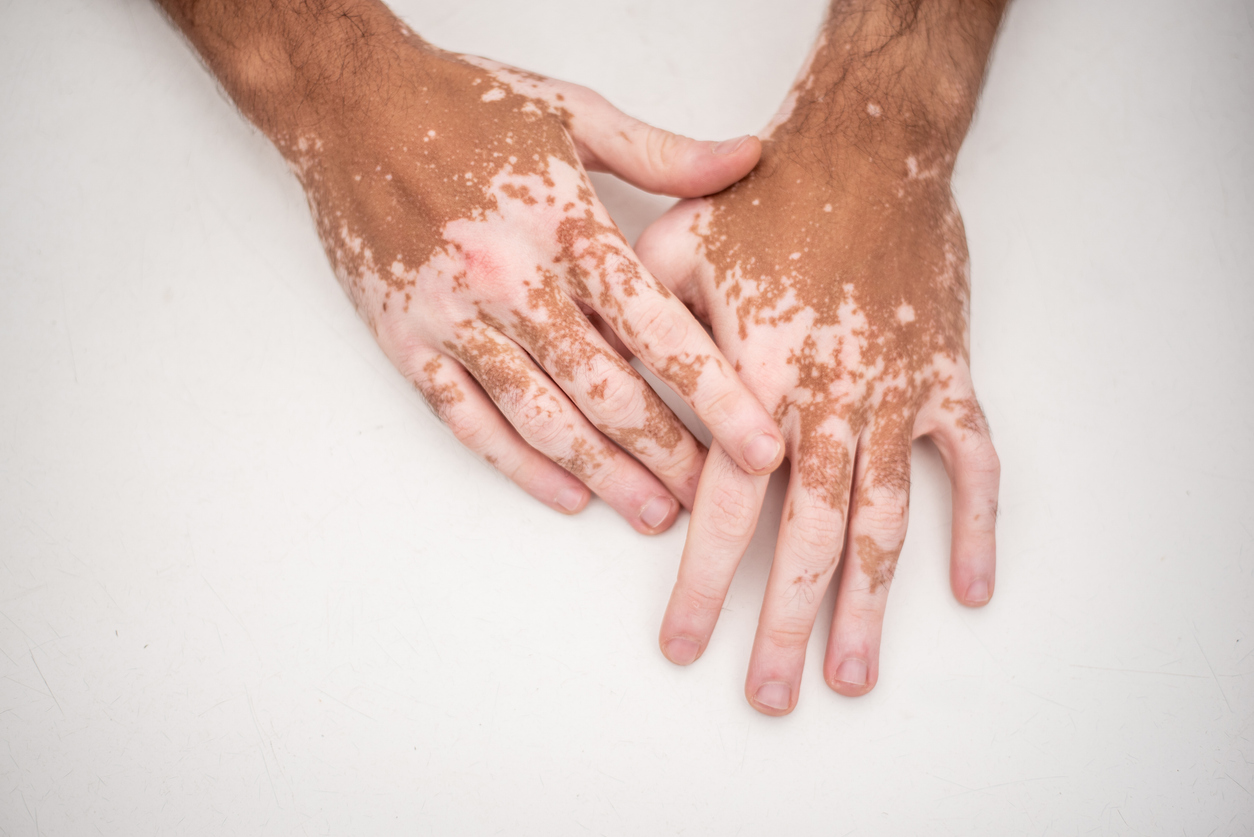
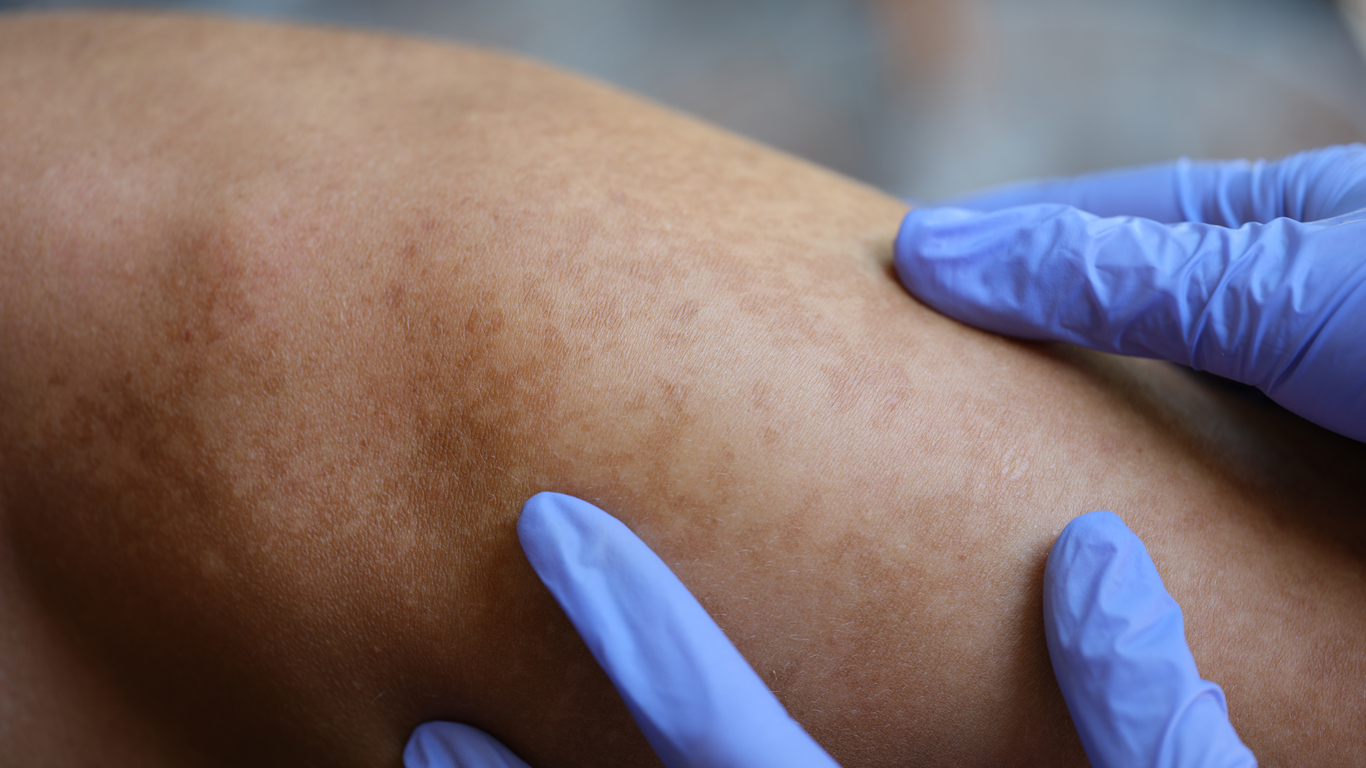
If you have vitiligo, you may first notice chalky-white patches appearing on your skin. If you have non-segmental vitiligo, the patches forming are often symmetrical (occurring on both sides of the body) and tend to first appear on the face, hands, feet and genitals.1 2 While not a common symptom, your skin may become itchy before the loss of color starts. You could also notice some of your hair turning white or gray, including body and facial hair. The skin within your nose and mouth could lose pigmentation.
Depending on what kind and severity of vitiligo you have, the way the loss of skin color begins and progresses could vary. For some people, the patches of depigmented skin could be very small and localized, while for others it can affect much more of their body. The loss of skin color can be more noticeable for those with darker skin tones.
Frequently Asked Questions About Vitiligo
What is vitiligo?
Vitiligo is an autoimmune disease that causes chalky-white patches to appear on the skin. These patches form when the immune system attacks, which is often triggered by exposure to environmental triggers like toxic chemicals, physical injury, severe sunburn or even mental stress, and destroys melanocytes, skin cells that produce melanin, which determines skin color. However, it is possible for other factors to cause melanocytes to die. These include having certain genes that affect melanocytes.1 2 3
The patches of depigmented skin (skin that has lost its normal color) can be different shapes and sizes. While they can appear anywhere on the body, they most commonly affect the face (87% of cases) and the palms and soles of the hands and feet (76% of cases).5 In non-segmental vitiligo, patches often follow a symmetrical distribution on both sides of the body. In segmental vitiligo, they can occur on just one side of the body. Where the vitiligo patches overlap with your hair, that hair can turn white or gray.
Vitiligo affects up to 2% of the global population.6
What are the different types of vitiligo?
There are two classifications of vitiligo, segmental vitiligo and nonsegmental vitiligo. In some cases, you might have “unclassified” or “mixed” vitiligo, where your symptoms do not clearly align with either classification.⁷
- Segmental vitiligo – A rarer form of vitiligo in which patches of depigmented skin form on one side of the body. Color loss is often rapid but usually stops within a year.4
- Nonsegmental vitiligo – The most common form of vitiligo, making up around 84% of all people with vitiligo. Color loss happens on both sides of the body. This type of vitiligo can progress or recur throughout your life and is also more frequently associated with other immune-related diseases.4 There are numerous ways that nonsegmental vitiligo can present on your body, including:
- Generalized vitiligo – The most common type of nonsegmental vitiligo, in which patches of depigmented skin can be found across different parts of your body
- Localized/focal vitiligo – In which vitiligo patches only appear in a few parts of the body
- Acrofacial vitiligo – In which patches form around the face, hands and ears
- Mucosal vitiligo – In which color loss happens in the soft mucous membranes (e.g., mouth, genitals)
- Universal vitiligo – In which most or all (at least 80%) of the skin is affected by color loss
Who can get vitiligo?
Vitiligo can develop at any age. However, it most commonly appears in younger individuals under the age of 20, and sometimes during childhood.1 7 You may be more likely to get vitiligo if3:
- You have a family history of vitiligo; some genes may increase your risk of getting vitiligo
- You have another autoimmune disease such as diabetes, psoriasis, lupus, alopecia areata, anemia, Addison’s disease and thyroid disease
Will my vitiligo spread?
Vitiligo can spread over time though when and how it will spread is unpredictable. The progression of vitiligo can depend in part on which type you have, but even then it’s tricky to predict progression. In some cases (10-20% of people), skin pigment might return over time.2 3 You are more likely to regain lost skin color if your patches are localized on the face and only spread for a short amount of time. Younger diagnoses are also associated with greater likelihood of skin regaining its former color.3
Can vitiligo affect my health?
Vitiligo has relatively few direct impacts on your physical health. However, nonsegmental vitiligo is associated with higher risk of developing other autoimmune diseases, especially thyroid disease.8 You could have a greater chance of hearing loss and eye problems such as uveitis (inflammation of the eye).2 Sunburn is a concern with vitiligo, so it is important to use appropriate sun protection when needed.7
How can vitiligo impact my daily life?
The most profound impact of vitiligo is often mental and emotional. A large portion of people with vitiligo report feeling depressed or anxious as a result of lower self-esteem.7 This can have wide-ranging effects on your social and professional life. It is important to have support, including talking with a mental health professional and leaning on your friends, family and peers when you are struggling (e.g., a vitiligo support group).1
Because vitiligo can increase your risk of sunburn, you will want to be vigilant about skin protection. This includes sunscreen as well as wearing hats, clothing and protective cover that adequately shield you from sun damage.1 4
Is there a cure for vitiligo?
There is currently no cure for vitiligo. However, some medical approaches can help slow progression of skin color loss or restore color to de-pigmented patches. In some severe cases of vitiligo where the majority of your skin has depigmented, you might consider full depigmentation, which involves removing color from unaffected skin to achieve a more uniform appearance. However, this approach is intensive, lengthy and often permanent.1
Up to 20% of people with vitiligo will see their original skin color completely restored over time.3 For others, there are a number of treatment options, although these can include side effects. Non-medical management can also include make-up, self-tanner and/or hair dye.2 3 It is important to also protect your skin from damage or sunburn.
Are there new treatments for vitiligo?
There is approved topical treatment for vitiligo, and researchers continue to investigate potential new and more effective treatment. You can talk with your doctor about options for your treatment plan, including whether you may be a good candidate for a clinical trial.
Sources:
1 National Institutes of Health. National Institute of Arthritis and Musculoskeletal and Skin Diseases. (Oct. 2022). Vitiligo. https://www.niams.nih.gov/health-topics/vitiligo
2 Mayo Foundation for Medical Education and Research. (Feb. 1, 2024). Vitiligo. https://www.mayoclinic.org/diseases-conditions/vitiligo/symptoms-causes/syc-20355912
3 Cleveland Clinic. (Nov. 23, 2022). Vitiligo. https://my.clevelandclinic.org/health/diseases/12419-vitiligo
4 American Academy of Dermatology Association. (Jun. 29, 2022). Vitiligo. https://www.aad.org/public/diseases/a-z/vitiligo-overview
5 Speeckaert, Reinhart and Nanja van Geel. (2014). Distribution patterns in generalized vitiligo. Journal of the European Academy of Dermatology and Venereology 28 (6). https://pubmed.ncbi.nlm.nih.gov/23651011/
6 Kruger, Christian and Karina Uta Schallreuter. (Oct. 2012). A review of the worldwide prevalence of vitiligo in children/adolescents and adults. International Journal of Dermatology 51 (10). https://pubmed.ncbi.nlm.nih.gov/22458952/
7 AL-smadi, Khadeejeh et al. (May 2, 2023). Vitiligo: A Review of Aetiology, Pathogenesis, Treatment, and Psychosocial Impact. Cosmetics 10 (3). https://www.mdpi.com/2079-9284/10/3/84
8 Gill, Liza et al. (Feb. 2016). Comorbid autoimmune diseases in patients with vitiligo: A cross-sectional study. Journal of the American Academy of Dermatology 74 (2). https://pubmed.ncbi.nlm.nih.gov/26518171/