

Scroll to learn more
About Parkinson's Disease
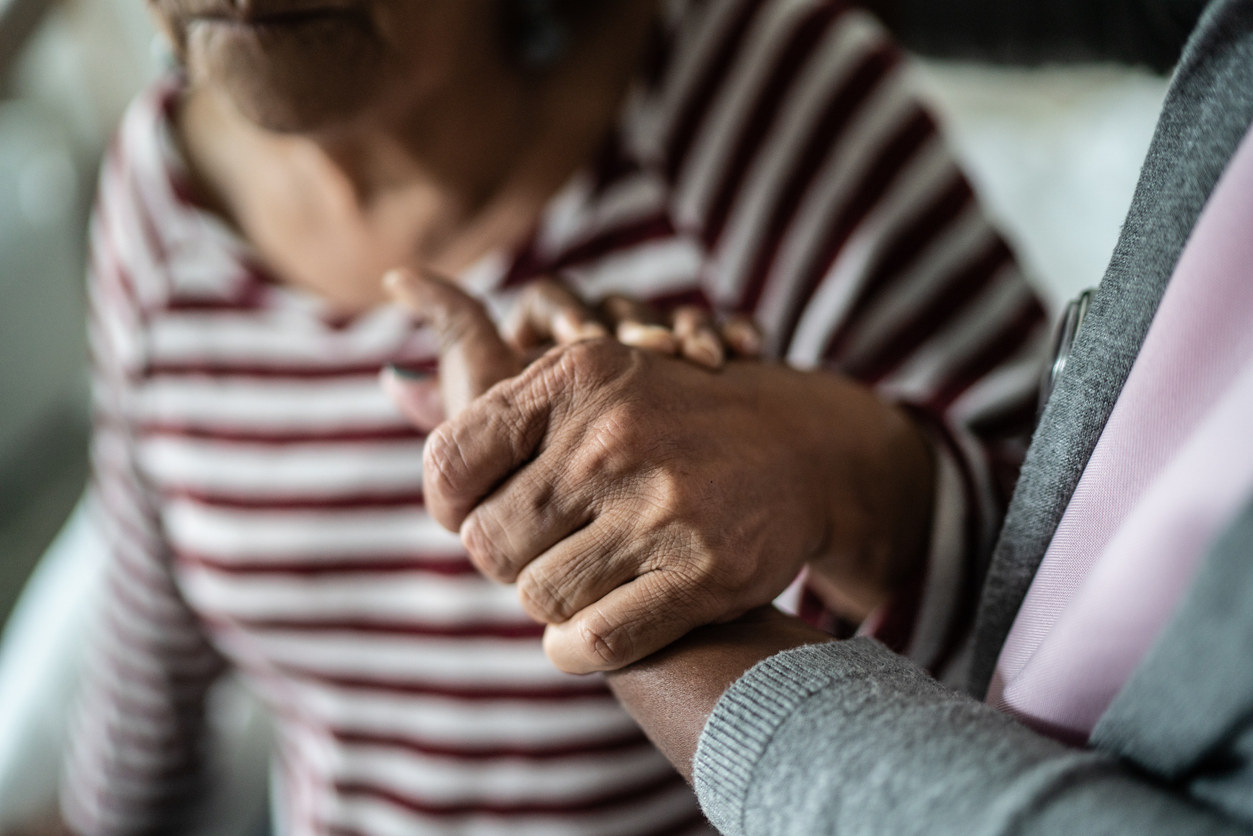
Recognizing Early Symptoms of Parkinson's Disease
The early signs of Parkinson's disease may be mild. Parkinson’s is often characterized by difficulty with voluntary movement. In the earlier stages of the disease, these “motor symptoms” can be localized on one side of the body13:
- Tremors while at rest, often starting in the fingers, hands or chin
- Muscle and joint stiffness (rigidity) that doesn’t ease up when you move
- Hunched posture
- Reduced facial expressions (often called “masked face”)
- Softening of the voice, causing you to sound breathy or raspy
- Smaller, more cramped handwriting
PD can also include non-motor symptoms. In some cases, these symptoms may be present for years before motor symptoms begin.2 5 At first, they can be easily mistaken for the symptoms of other conditions:
- Mental health impacts like depression or anxiety
- Sleep disorders such as insomnia or vivid dreams
- Constipation
- Dizziness and even fainting (a sign of low blood pressure)
- Loss of smell or other changes to your senses
- Cognitive changes, ranging from mild impairment to dementia
Symptoms will vary from person to person. Men are more likely to develop mild cognitive impairment. They also tend to experience a more rapid progression of cognitive symptoms in the later stages of the disease. Women, meanwhile, are more likely to be at risk for falls and to experience more severe and ongoing anxiety and depression.6
If you have been diagnosed with PD, talk with your doctor about how this condition could affect your day-to-day activities and options for improving your quality of life. Don’t be afraid to ask for help, or to talk with friends and family members about what you’re going through.13
Frequently Asked Questions About Parkinson's Disease
What is Parkinson’s disease?
Parkinson’s disease is the second-most common neurodegenerative disease, after Alzheimer’s. An estimated 11 million people worldwide have Parkinson’s. It is one of the leading global causes of disability.3 7 Parkinson’s is a progressive disease, meaning it gets worse over time.
In Parkinson’s disease, nerve cells (or “neurons”) that produce dopamine begin to dysfunction and die. The affected neurons are located in the basal ganglia, a part of the brain that affects movement. The loss of these dopamine-producing nerve cells causes many of the motor symptoms common to Parkinson’s.1 2
Other changes in the brain also occur, which scientists are still learning more about. This includes production of norepinephrine, a chemical that helps control bodily functions like blood pressure and heart rate. This may affect some of the non-motor symptoms observed in people with Parkinson’s, including fatigue and sudden drops in blood pressure when standing.2
Abnormal proteins called Lewy bodies also begin to build up in the neurons. While it is believed Lewy bodies are involved in Parkinson’s, research is still ongoing to understand the role they play. Some changes in the brain, such as the accumulation of Lewy bodies, may begin several years before you notice any symptoms.8
What causes Parkinson’s disease?
Scientists are still researching the causes of Parkinson’s disease. Both genetic and environmental factors may play a role. While certain genes have been linked to Parkinson’s, many instances of the disease are not hereditary and are instead considered “sporadic.” Environmental factors can include exposure to certain toxins such as pesticides or head injuries. Healthy dietary habits and regular exercise may help to lower risk of Parkinson’s.2 9
What are the risk factors for Parkinson's disease?
The exact causes of Parkinson’s disease are still unknown. However, it is more common in older adults. Risk factors include1 2:
- Being 60 years or older
- Having a close relative with Parkinson’s
- Being exposed to toxins such as pesticides
Men are more likely to develop Parkinson’s than women. Growing evidence also suggests there are differences in how Parkinson’s is experienced between men and women. However, the connection is not completely understood.6
How common is Parkinson’s disease?
Worldwide, Parkinson’s affects about 1-5% of people over the age of 60. It is rare in people under 50. For men, research suggests that by the age of 80, Parkinson’s affects 258 out of every 100,000 men and 103 out of every 100,000 women. As we continue to live longer, we are seeing greater prevalence of Parkinson’s.6
How is Parkinson’s disease diagnosed?
There is currently no test specifically approved for Parkinson’s disease.2 Doctors typically diagnose Parkinson’s by assessing your symptoms and ruling out other possible causes. Your doctor may order tests and scans—for instance, an MRI to rule out other conditions that mimic Parkinson’s. For individuals who may have a family history, genetic tests can help to identify known genes associated with Parkinson’s. A skin biopsy or a lumbar puncture can identify the presence of an abnormal protein called alpha synuclein that is associated with Parkinson’s disease.
Besides movement, what does Parkinson's disease affect?
While people often associate Parkinson’s disease with movement-related symptoms, Parkinson’s can impact other parts of your life as well. While these non-movement symptoms can look different for each person, they can have a significant effect on your daily life. It’s important to talk with your care team about what you’re experiencing and learn about options for managing these symptoms.3
Impacts to your overall health – Having Parkinson’s can involve fatigue, pain and shortness of breath and other respiratory challenges. It can help to prioritize a full-body approach to your health, from promoting calm and rest to engaging in exercise and activities you enjoy.
Sleep disorders – Sleep problems are common for Parkinson’s disease, affecting more than 75% of people with Parkinson’s. These can include trouble going to sleep or staying asleep, or sleepiness during daytime. REM sleep disorder behavior, in which you act out dreams while asleep, and restless leg syndrome can also disrupt a good night’s rest. You can talk with your care team about options for getting better sleep at night.
Sensory changes – Sometimes people with Parkinson’s experiences changes in smell, vision and touch. A reduced sense of smell can start years or decades before motor symptoms become noticeable. You might find It harder to focus your eyes or can experience double vision (seeing two of something). You could also experience either numbness or increased sensitivity, even pain, in parts of your body. Treatments can help mitigate some of these symptoms.
Mental health changes – If you’ve been diagnosed with Parkinson’s, you may have experienced changes in your mental health before you noticed a tremor or other movement-related symptoms. You might have felt depressed, apathetic or anxious. If you are experiencing any of these emotions, don’t be afraid to speak up and seek help.
Cognitive changes – As many as 30% of people with Parkinson’s have challenges thinking or remembering things. These include challenges with thought processes, concentration and language, as well as hallucinations or dementia. Sometimes these challenges may be affected by medications you may be taking for Parkinson’s, or by other non-movement symptoms (for instance, difficulty sleeping). Exercise can help with these cognitive changes.2 10 13
What is the progression of Parkinson’s disease like?
Parkinson’s disease progresses gradually, although it cannot be reversed. The early stages of Parkinson's disease are characterized by slight motor changes, such as tremors and stiffness on one side of the body, and by non-motor symptoms such as depression, poor sense of smell and sleep disturbances.
As the disease progresses, treatment can become less effective and motor symptoms get worse, making daily activities harder. This is why Parkinson’s is frequently talked about in terms of “on” and “off” time. On time is when symptoms are controlled.14 Off time is when disease symptoms—motor and/or non-motor—are uncontrolled. Off time can be unpredictable. Symptoms can return at any time and are not necessarily linked to medication doses.15 In later stages, non-motor symptoms can also become more noticeable, significantly impacting quality of life.
Your care team can help address your symptoms as they evolve.
What can I expect if I am a caregiver or family member of someone with Parkinson’s disease?
Having Parkinson’s, or caring for someone with Parkinson’s, can be lonely. As the disease progresses, it can be harder to participate in the same day-to-day activities you used to. Care demands on caretakers also increase. Participating in support groups or social activities can help reduce isolation and contribute to overall wellbeing. Support groups are also a potential source of information and local resources.2
Are there new treatments for Parkinson's disease?
Researchers are continuously investigating potential new and more effective treatments. For guidance on the best treatment options for you—and to determine if you may qualify for a clinical trial—please speak with your healthcare provider.
Sources:
1National Institute on Aging. (Apr. 14, 2022). Parkinson’s disease: Causes, symptoms, and treatments. National Institutes of Health. https://www.nia.nih.gov/health/parkinsons-disease/parkinsons-disease-causes-symptoms-and-treatments
2National Institute of Neurological Disorders and Stroke. (Mar. 5, 2025). Parkinson’s disease. National Institutes of Health. https://www.ninds.nih.gov/health-information/disorders/parkinsons-disease
3Parkinson’s Foundation. (n.d.). Parkinson’s Foundation. https://www.parkinson.org/
4Mayo Foundation for Medical Education and Research. (Sept. 27, 2024). Parkinson’s disease. https://www.mayoclinic.org/diseases-conditions/parkinsons-disease/diagnosis-treatment/drc-20376062
5Cleveland Clinic. (Apr. 15, 2022). Parkinson’s Disease. https://my.clevelandclinic.org/health/diseases/8525-parkinsons-disease-an-overview
6Cerri, S., Mus, L., & Blandini, F. (2019). Parkinson's disease in women and men: What's the difference? Journal of Parkinson’s Disease, 9 (3). https://pmc.ncbi.nlm.nih.gov/articles/PMC6700650/
7Axelsen, T. M., & Woldbye, D. P. D. (2018.) Gene therapy for Parkinson’s disease: An update. Journal of Parkinson’s Disease, 8 (2). https://pmc.ncbi.nlm.nih.gov/articles/PMC6027861/
8Xu, L., & Pu, J. (2016). Alpha-synuclein in Parkinson's disease: From pathogenetic dysfunction to potential clinical application. Parkinson’s Disease, 2016 (1). https://pmc.ncbi.nlm.nih.gov/articles/PMC5005546/
9Simon, D. K., Tanner, C. M., & Brundin, P. (2019). Parkinson disease epidemiology, pathology, genetics, and pathophysiology. Clinics in Geriatric Medicine, 36(1), 1-12. https://pmc.ncbi.nlm.nih.gov/articles/PMC6905381/
10Massano, J., & Bhatia, K. P. (2012). Clinical approach to Parkinson's disease: Features, diagnosis, and principles of management. Cold Spring Harbor Perspectives in Medicine, 2 (6). https://pmc.ncbi.nlm.nih.gov/articles/PMC3367535/
11Parkinson’s Foundation. (n.d.). 10 Early Signs. https://www.parkinson.org/understanding-parkinsons/10-early-signs
12Davis Phinney Foundation for Parkinson’s. (n.d.) What is Parkinson’s. https://davisphinneyfoundation.org/what-is-parkinsons/
13American Parkinson Disease Association. (Mar. 18, 2025). Early signs of Parkinson’s disease. https://www.apdaparkinson.org/article/first-symptoms-of-parkinsons/
14Parkinson’s Europe. (n.d.) Wearing off and motor fluctuations. https://www.parkinsonseurope.org/about-parkinsons/symptoms/motor-symptoms/wearing-off-and-motor-fluctuations/
15The Michael J. Fox Foundation for Parkinson’s Research. “Off” Time in Parkinson’s Disease. https://www.michaeljfox.org/time-parkinsons-disease