

Scroll to learn more
About Neurotoxins
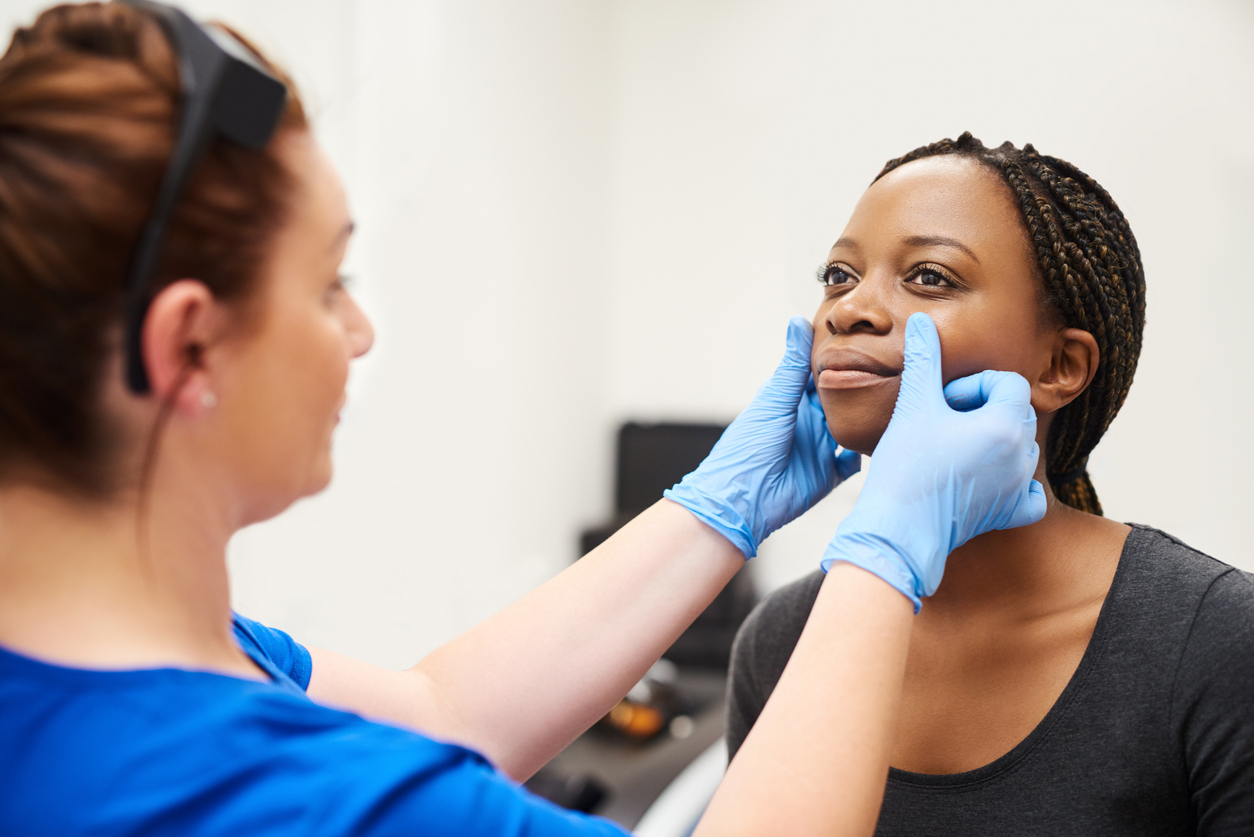
Using Botulinum Neurotoxin to Improve Facial Aesthetics
As you age, the skin of your face loses elasticity and volume and forms noticeable lines. Facial lines and neck bands can form from repeated muscle use. These changes, while natural, may not match your inner sense of energy, age and confidence.
Botulinum toxin is a common medical treatment to improve facial aesthetics, offering a natural, refreshed look while offsetting common signs of aging. When carefully manufactured and used in small amounts, the neurotoxin can be safely injected into the muscle to improve:
- Frown lines
- Forehead lines
- Crow’s feet lines
- Vertical neck bands from the jawline along the neck
Botulinum toxin works by relaxing muscles, preventing them from fully activating when making facial expressions. The effects commonly last between 3 and 4 months.2 It should only be administered by a licensed, experienced health care professional.7 9
Frequently Asked Questions About Facial Aesthetics – Toxins
What is botulinum toxin and how does it work?
Botulinum toxin (also called botulinum neurotoxin) has been used for many medical and cosmetic conditions since the late 20th century.11 In its naturally occurring form, botulinum toxin is a very potent neurotoxin derived from the Clostridium botulinum bacteria, which causes a dangerous food poisoning called botulism. However, when carefully manufactured for medical use and used in small doses, it can be safely injected to improve these conditions:
- Facial wrinkles caused by dynamic movement (e.g., crow’s feet, frown and forehead lines)
- Vertical bands connecting the jaw and neck
Botulinum toxins work by blocking nerves that tell your muscles to activate. This prevents injected muscles from contracting, which smooths out the skin above the muscle. As a result, botulinum toxin can be especially effective at reducing lines formed from decades of smiling, laughing and furrowing your brow. It can also prevent these “dynamic wrinkles” from becoming permanent.5 A trained health care professional can target areas to improve appearance while still allowing you a range of facial expressions. The effect typically lasts 3 to 4 months.3
There are two main types of botulinum toxin, Type A and Type B. Type A is typically used for facial wrinkles. Type B can be used to treat non-cosmetic conditions such as neck spasms.7
How can botulinum toxin improve my appearance?
Botulinum toxin can help treat many signs of aging. It is perhaps most known for improving the appearance of facial wrinkles and so improving skin smoothness.1 6 However, it has other uses as well. Researchers continue to investigate aesthetic uses of botulinum toxin.
Botulinum toxin may not improve facial wrinkles and neck bands for everyone. If toxins do not work for you, talk with your health care professional about alternative treatment options.5
What conditions other than facial aesthetics can toxins help treat?
Botulinum toxin has many other clinical uses, including controlling pain and spasms or unwanted muscle contractions. Conditions botulinum toxin can be used to treat include:
- Migraine pain
- Overactive bladder and incontinence
- Excessive sweating
- Cervical dystonia, a condition in which the neck and upper shoulder muscle contract painfully
- Muscle spasms caused by cerebral palsy and other neurological conditions
- Eye twitching and excessive blinking
- Lazy eye
- Chronic pain, including nerve, joint, muscular and pelvic pain8
How long does toxin treatment last?
You will usually see the botulinum toxin injection start to take effect within 1 day. The effect typically lasts between 3 and 4 months.7
What are common side effects from toxins?
After a botulinum toxin injection, you may be instructed to stay upright for the next 3-4 hours and not to rub the injection site for at least half a day.8 This may alleviate common side effects such as soreness, bruising, and swelling. These effects usually go away after about a week.3 In rare cases, you may also experience side effects such as:
- Headache
- Drooping eyelid or eyebrow from muscle weakness near the injection site
- Flu-like symptoms
- Upset stomach
If you experience botulism symptoms—including difficulty breathing, talking or swallowing, blurring vision or muscle weakness—or an allergic reaction, you should seek medical care right away.4 10
Are there risks to using toxins?
It is essential to only get botulinum toxin from a qualified, licensed health care professional. Never buy botulinum toxin online, and do not get injections outside of a medical clinic or spa. This can result in serious side effects, including botulism, lasting muscle paralysis, and eye damage.3 10
Am I good candidate for botulinum toxin?
Before treatment, a health care professional who is licensed to give botulinum toxin injections should evaluate you and your medical history. This is to assess if you have any medical conditions (such as allergies or neuromuscular diseases) that would make you an unsuitable candidate for injections. You should never receive botulinum toxin if you are pregnant or breastfeeding.1 8
Where I can get toxins for facial aesthetics?
Botulinum toxin injections are considered an outpatient procedure. You can go home the same day the procedure is done. Although botulinum toxin injections are not surgical procedures, they require qualified training to perform safely.5 Only receive injections from a licensed health care professional.
How frequently can I receive treatment?
The effects of botulinum toxin injections are temporary, not permanent. Your health care professional will advise you on how often to receive treatment to maintain results. The safety and effectiveness of dosing with BOTOX Cosmetic more frequently than every 3 months have not been clinically evaluated.
Sources:
1Biello, Andrew and Bovey Zhu. (Sept. 4, 2023). Botulinum Toxin Treatment of the Upper Face. StatPearls https://www.ncbi.nlm.nih.gov/books/NBK574523/
2National Library of Medicine. (Aug. 10, 2025). Botox, also called: Botulinum toxin type A https://medlineplus.gov/botox.html
3America Academy of Dermatology. (2026). Botulinum Toxin Therapy: Overview https://www.aad.org/public/cosmetic/wrinkles/botulinum-toxin-overview?NoAds
4Small, Rebecca. (Aug. 1, 2014) Botulinum toxin injection for facial wrinkles. American Family Physician 90 (3) https://www.aafp.org/pubs/afp/issues/2014/0801/p168.html
5American Society of Plastic Surgeons. (2026). Botulinum Toxinhttps://www.plasticsurgery.org/cosmetic-procedures/botulinum-toxin
6American Board of Cosmetic Surgery. Botox-Type Injectables Guide https://www.americanboardcosmeticsurgery.org/procedure-learning-center/non-surgical/guide-botox-type-injectables/
7Mayo Foundation for Medical Education and Research. (Nov. 19, 2024). Botox injections https://www.mayoclinic.org/tests-procedures/botox/about/pac-20384658
8Cleveland Clinic. (Apr. 6, 2022). Botox (Botulinum Toxin)https://my.clevelandclinic.org/health/treatments/8312-botulinum-toxin-injections
9National Institutes of Health. News in Health. (July 2023). The Benefits of Botulinum Toxin https://newsinhealth.nih.gov/2023/07/benefits-botulinum-toxin
10Centers for Disease Control and Prevention. (Dec. 17, 2024). Harmful Reactions Linked to Counterfeit "Botox" or Mishandled Botulinum Toxin Injections https://www.cdc.gov/botulism/outbreaks/harmful-reactions-botox-injections/index.html
11Leszczynska, Anna et al. (Feb. 5, 2024). Five decades of the use of botulinum toxin in ophthalmology. Indian Journal of Ophthalmology 72 (6)https://journals.lww.com/ijo/fulltext/2024/72060/five_decades_of_the_use_of_botulinum_toxin_in.7.aspx
12Ferrillo, Martina et al. (Feb. 14, 2025.) The Role of Botulinum Toxin for Masseter Muscle Hypertrophy: A Comprehensive Review. Toxins 17 (2) https://doi.org/10.3390/toxins17020091